





New to Dive Trips? Understand Liveaboard vs Land Based
 RAKYAT DAILY
13 Oktober 2026 4:04 pm
.
5 menit membaca
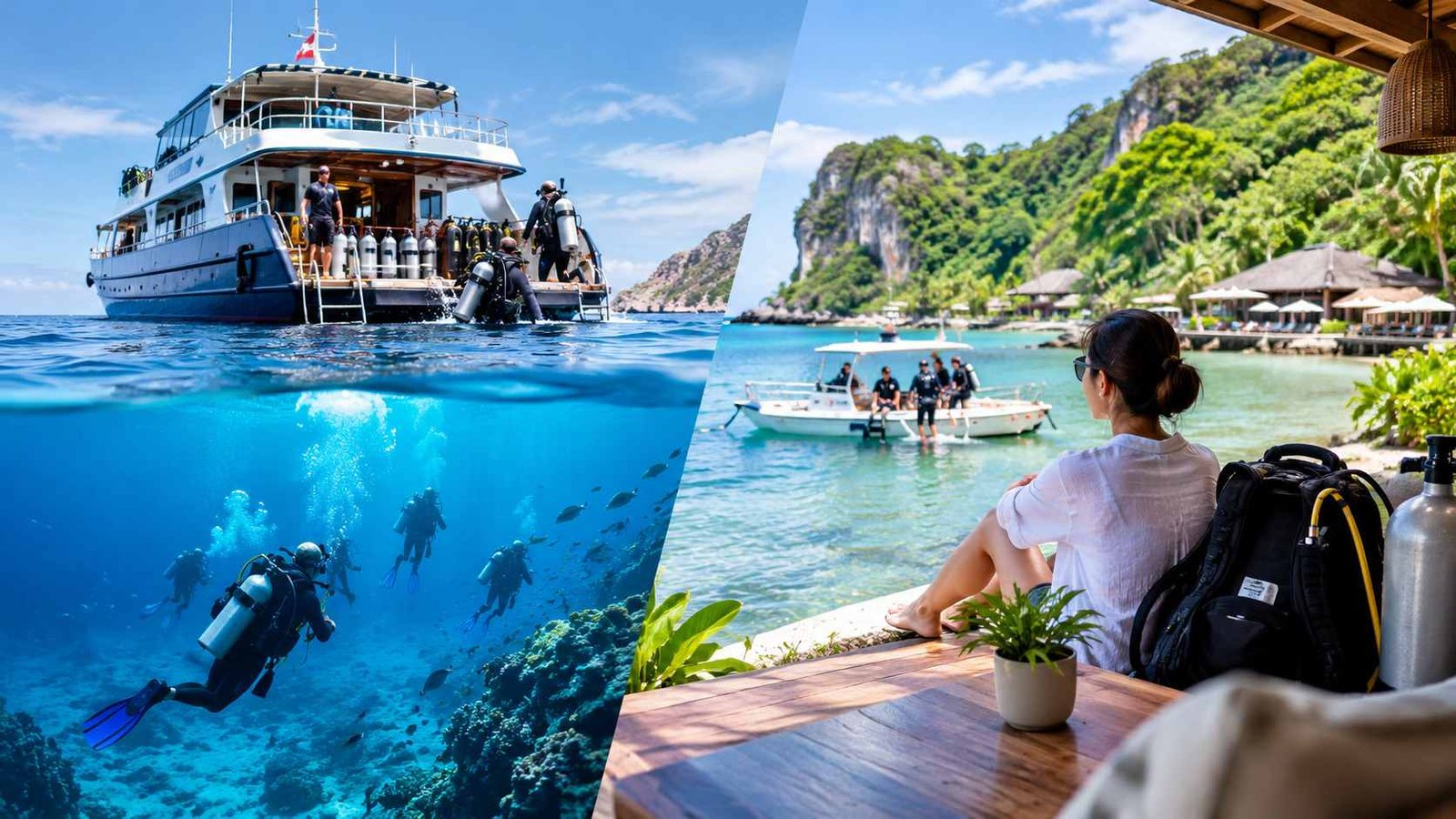
Liveaboard vs Land-Based Diving: How to Pick the Perfect Dive Trip
Planning a diving holiday involves more than choosing which underwater locations to explore.
You also need to decide where you will stay, how you will reach dive sites, and how you want to spend your time between dives.
Two common options are liveaboard trips and land based diving experiences.
Understanding liveaboard vs land based diving can help you choose an arrangement that matches your budget, experience, and travel preferences.
Both options can offer memorable underwater adventures, but they create different experiences above the surface.
What Is Liveaboard Diving?
A liveaboard is a boat designed to accommodate guests for an extended diving trip.
Instead of returning to a hotel after each day on the water, you stay aboard the vessel while the crew takes you to different dive locations.
Liveaboard trips often include accommodation, meals, scheduled dives, and support from a crew or dive team.
The exact package depends on the operator, destination, and duration of the trip.
This arrangement can be convenient for divers who want to visit several remote sites without repeatedly traveling between a hotel and the ocean.
However, you should check the itinerary, cabin arrangements, included services, and safety procedures before booking.
What Is Land Based Diving?
Land based diving means staying on land, usually in a hotel, resort, or guesthouse, and traveling to dive sites for scheduled excursions.
Depending on the destination, operators may use boats to reach offshore locations.
Baca Juga:
This option separates your accommodation from your diving activities.
After a dive, you can return to your room, enjoy a meal on land, or explore nearby attractions when your schedule and diving restrictions allow.
For travelers comparing liveaboard vs land based diving, this flexibility can be a major advantage.
You have more freedom to choose where you stay and how you spend your non diving time, although access to distant dive sites depends on local transport and operator arrangements.
1. Compare the Overall Cost
The total cost of a liveaboard trip may include accommodation, meals, and multiple scheduled dives in one package.
However, additional expenses can include equipment rental, park fees, transfers, gratuities, or other services that the package excludes.
Land based diving may offer more control over spending because you can choose accommodation, restaurants, and the number of dive trips separately.
Costs vary widely depending on the resort, operator, and activities you select.
When comparing liveaboard vs land based diving, calculate the complete trip budget rather than looking at the advertised package price alone.
Consider how many dives you want to complete and whether you prefer an all inclusive arrangement or separate bookings.
2. Think About Comfort and Personal Space
Life aboard a diving vessel can be enjoyable, but it involves sharing a relatively limited space with other guests and crew.
Cabin size, privacy, movement, and access to facilities depend on the vessel.
Staying on land can provide a different level of comfort.
You may have a private room, more accommodation choices, and easier access to restaurants or other facilities.
If you prefer more personal space or want to travel with a partner or family, land based diving may suit your preferences better.
If you enjoy spending most of your time on the water, a liveaboard may feel more immersive.
3. Consider Access to Dive Sites
Liveaboards can reach multiple locations during a trip, including sites that are difficult to access on a day excursion.
The route depends on the vessel, weather, and itinerary.
Land based diving can also provide access to excellent underwater environments, especially in destinations with established local dive operators.
However, some locations may require longer boat transfers or may not fit within a typical day trip.
The best choice in liveaboard vs land based diving depends on the sites you want to visit, how much time you have, and what local operators can safely offer.
4. Check Your Experience and Comfort Level
Neither arrangement automatically makes a dive suitable for every diver.
Always consider certification requirements, recent experience, current conditions, and the difficulty of the planned sites.
Some liveaboard itineraries focus on challenging locations that require strong skills and experience.
Land based operators may offer a wider choice of introductory experiences, refresher sessions, and guided dives, depending on the destination.
Discuss your abilities honestly with the operator before booking.
A suitable dive plan should match your experience rather than push you beyond your limits.
5. Decide What You Want Beyond Diving
A liveaboard trip centers on life at sea.
Between dives, you will generally remain aboard the vessel, follow its schedule, and enjoy the ocean environment.
A land based holiday can combine diving with other activities, such as visiting beaches, exploring local restaurants, taking scenic drives, or enjoying a relaxing afternoon at your accommodation.
This can appeal to travelers who want a more varied island holiday.
When weighing liveaboard vs land based diving, think about the entire trip, not only the time spent underwater.
Which Diving Experience Should You Choose?
Liveaboards can suit travelers who prioritize multiple dive sites and want to spend several days at sea.
Land based diving can suit those who value accommodation choices, flexibility, and opportunities to explore beyond diving.
There is no single best option for everyone.
Compare the itinerary, operator standards, total cost, and your personal preferences before making a decision.
If you prefer to combine underwater adventures with time to explore the island, consider diving Nusa Penida with Deep Roots as part of your next trip.
Staying on the island gives you an opportunity to enjoy local scenery and plan your diving activities around a comfortable land based holiday.
beginner diver tipsdive holidaydive holiday planningdive resortdive site accessdive trip guidedive vacation planningdiving adventureisland travelland based divingliveaboard divingliveaboard vs land basednusa penida divingocean adventurescuba dive guidescuba diving tipsscuba diving vacationscuba lifescuba travel guideunderwater travel
Artikel Terkait